
Free Behavioral Health Training for
Professionals Who Work with Older Adults
If you work with older adults, BRIDGES for Older Adults is for you.
BRIDGES helps older-adult serving professionals recognize behavioral health concerns, respond in supportive ways, and connect older adults to the right resources. With practical training and easy-to-use tools, BRIDGES supports earlier help, stronger chronic disease self-management, and better overall well-being.
Training and Tools for Older-Adult Serving Professionals
Recognize Behavioral Health Concerns •
Respond with Care • Refer to Support
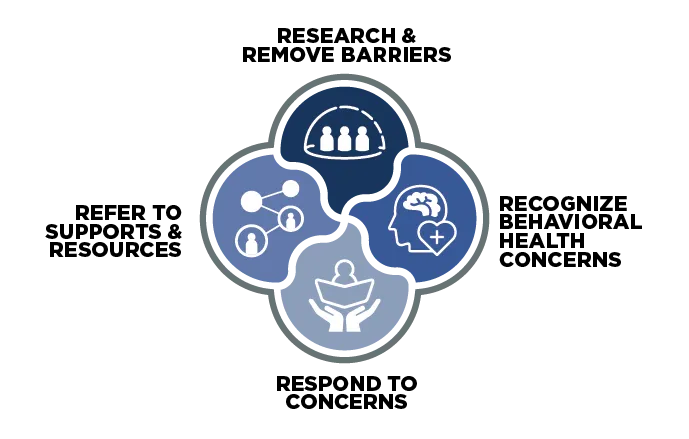
Research and Remove Barriers
BRIDGES for Older Adults is conducting annual research relating to the needs of older adults and the people who care for them as well as the barriers and facilitators for facilitators of chronic disease self management education programs. We also are working to reduce stigma around help seeking for behavioral health concerns in the older adult population.
Recognize Behavioral Health Concerns
We provide education, trainings, toolkits and other resources so chronic disease class facilitators for older adults can spot signs of behavioral health concerns like depression, anxiety, post-traumatic stress disorder, bipolar disorder and substance use disorder.
Respond to Concerns
Learn how to best Respond to Behavioral Health Concerns in Older Adults, including during group situations where you must maintain fidelity of the program.
Refer to Supports & Resources
Learn how to refer older adults with behavioral health concerns to supports and resources in your community. Better understand the levels of care and what might be a good fit for the older adult and the concern.
Sign Up for Our E-Newsletter
Stay informed about the latest happenings in the BRIDGES for Older Adults initiative by signing up for our newsletter. This will ensure you receive important updates, resources, and event notifications directly to your email inbox.



© 2025. All Rights Reserved. LECOM BRIDGES for Older Adults | LECOM Health
This website is supported by the Administration for Community Living (ACL), U.S. Department of Health and Human Services (HHS) as part of a financial assistance award totaling $3,260,699 with 100 percent funding by ACL/HHS. The contents are those of the author(s) and do not necessarily represent the official views of, nor an endorsement, by ACL/HHS, or the U.S. Government.